
Why the Same Tarot Card Keeps Turning Up
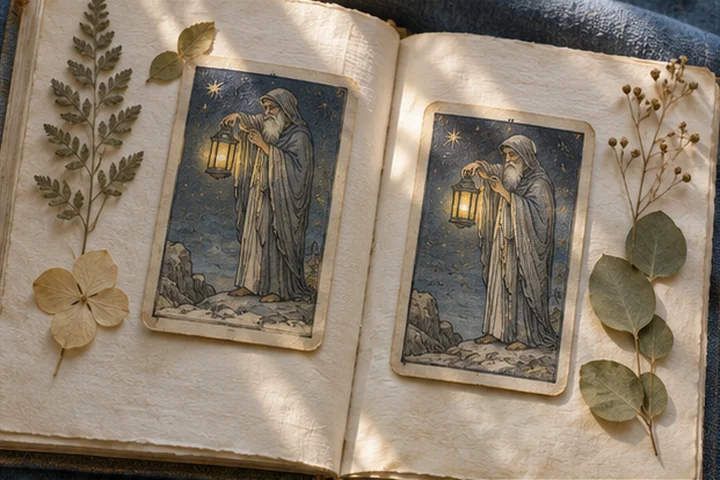
Suppose you draw The Hermit on Monday when asking about work. On Friday, there it is again in a reading about a friendship. It’s tempting to carry Monday’s interpretation straight across. Before you do, go back to the actual questions. A quiet hour to concentrate and an evening spent avoiding a difficult call can look similar from the outside.
Keep a two-column note
In one column, record the question, the card’s position, and one detail from the image. In the other, record what was happening in your life that day. A week later, compare the notes. Did solitude feel restorative on both days? Was there a difference between choosing time alone and feeling left out?
Let an ordinary repeat be ordinary
Cards can recur by chance. You don’t have to invent a message to make the draw worthwhile. If nothing connects the two entries, leave the page there. Sometimes the interesting part is how differently you responded to the same image.
Read the little label above the card
A spread gives each card a job. Take the Eight of Cups, the card with a traveler walking away from a stack of cups. In a position called “what I’m ready to leave,” the traveler may bring to mind a commitment you’ve outgrown. Move it to a position called “what I am afraid of losing,” and your attention may shift to the cups left behind. You might see the friendship you hope will survive when the group disbands. Both readings come from the same picture. The place the picture occupies changes which part matters.
When a card repeats, I write each position on a separate scrap of paper and lay the scraps above the card one at a time. It takes seconds. Try “what has been taking my time?” and then “where might I find a little room?” above the Four of Pentacles. In the first position you might notice the effort of holding everything together. In the second, you might see the value of reserving one evening for yourself. Read just the second scrap tomorrow and see whether you still give it Monday’s answer.
Follow one card through three everyday scenes
Imagine you draw the Six of Pentacles on a day when you’re wondering how to handle a shared kitchen. Your roommate does most of the cooking. You usually do the shopping. The card shows a figure distributing coins, and the scales catch your eye. What feels uneven? Perhaps the actual problem is that neither of you knows who bought the expensive pantry staples last month. In your notebook you write “Keep the receipts until Sunday.” It’s an ordinary interpretation you can try out.
Two weeks later it appears while you’re thinking about a new volunteer role. There are those scales again. This time the detail that sticks is the hand reaching up. You’re comfortable giving help; you’re much less comfortable admitting that you need someone to show you the ropes. You ask the coordinator if you can shadow another volunteer on your first shift. The kitchen entry would make little sense here. The new question gave you a different way into the same scene.
On its third appearance you have no question at all. You’re shuffling while waiting for a pot to boil. An honest entry for that day might be “Saw the Six of Pentacles and immediately remembered the missing olive oil.” That counts. You don’t have to turn a kitchen association into guidance for your whole life. Alongside a few careful readings, an ordinary memory keeps the record recognizably yours.
Take a second look at what surrounded it
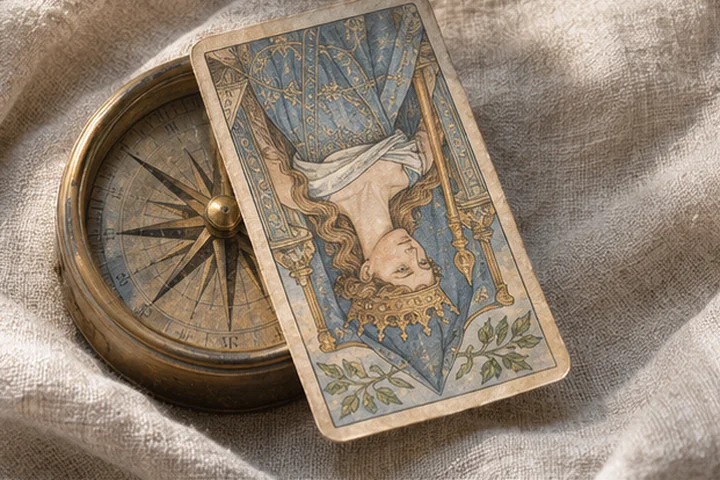
A single card can draw so much attention that you forget the two beside it. On an index card, write out Monday’s entire spread in order. Then write out Friday’s. If The Hermit sat between the Eight of Pentacles and the Three of Pentacles on Monday, your quiet time might be the hour you need between practicing something alone and bringing it to a group. If it came after the Five of Cups on Friday, the same solitude may feel tender or tiring. Notice the difference in mood before trying to connect the stories.
One question I like here is “Would I still have noticed this if the card had a different name?” Put a finger over the printed title. Perhaps the lamp in The Hermit’s hand reminds you of waiting up for someone. That’s a personal association worth recording, especially if another reader would focus on the mountain instead. Mark it as a memory of your own. Six months from now you’ll understand why that lamp meant something particular that week.
Check how the card got back into the deck
If you draw from a thoroughly mixed deck and replace the card after each session, the same card can appear again the next time. If you leave the first card on your desk, it can’t come up at all until you put it back. Both practices are perfectly usable. They simply give the word “again” different meanings. I also note whether I chose the card deliberately as a reference. A card I put in the middle of a spread myself belongs in a separate column from the cards I turned over.
On a website that offers one daily card, refreshing the page may show the same card all day by design. That’s a feature of the page. If you’re comparing a digital draw with one from your own deck, make a tiny note of the source. The image may even be different enough to change what you see. A printed card with a worn corner is familiar to your hands in a way that a small picture on your phone simply isn’t.
When you would rather put the card away
Sometimes a repeat makes a reader uneasy. You ask about a promising new relationship and keep seeing the Tower. One frightening word can drown out the rest of the reading. I’d put the deck down and reread the original question aloud. Did you ask what might change once you begin dating, or did you ask what someone else will do next Friday? Those are very different things to ask of a symbolic picture. The first leaves room to explore your expectations. The second can send you searching for certainty the card can’t give you.
A generous rule for an anxious afternoon is one entry, then lunch. Describe the card, describe one thing you actually know about the situation, and leave both sentences alone for the rest of the day. The person you’re dating may keep in touch as usual. Your feelings about the picture may soften or stay exactly the same. When you open the notebook again, give yourself permission to write “I still don’t know what to make of this.” That’s a useful place to leave a repeat, too.